

Meditation for Inner Serenity
Meditation 101, for Beginners

mental health has dramatically increased as a source of pain among young and older people alike. numerous tools are available to help reduce the overwhelming effects of anxiety, depression, illness, disorders, etc., though there is only one that is free and accessible to all people, and most effective, given the time to do so.
this tool is meditation.
meditation has been around for thousands of years, found in nearly every culture and associated with many religious and spiritual practices, as it is so common and crucial of a human habit that to not have it as a part of your routine would severely limit your life experience.
it is not religious, but human, to meditate.
just like walking, sleeping, eating, loving, talking, working, etc.
meditation is essential to human nature.
in this blog for beginners, I’m going to walk you through what meditation is, why meditation is important, the benefits, how to meditate easily, and how to ensure it imbeds into your daily routine.
WHAT IS MEDITATION?
while you may think of meditation as monks in highly isolated monasteries on distant, hard to reach rocks, or hippies on meditation pillows with incense smoking and tapestries waving behind them, meditation can more simply be intentional rest, with zero stimulation, solitude.
“simply, meditation is dedicated time of stillness to refocus the mind.”
it’s a time to allow the mind to rest and reorient after a chaotic routine.
meditation is also rest, a time to allow the body to digest the enormous amount of information received for the day.
it’s like you just devoured a massive meal and immediately move on to other activities, still congested from the tremendous work needed to break down the energy packed inside the food.
such as the sacred time to eat, where hopefully we cook, sit, breathe, pray, chew, and enjoy, or the time to write, or the time to work, or sleep, or court a mate, there is a successful process associated with each task for an intended purpose.
it is also like a rest period for exercise. you would never lift weights without rest periods between sets, lifting days, otherwise the body is overworked and unable to grow from the stress.
the same is for the mind, though the problem is that it’s more difficult to detect when the mind needs rest.
why?
because it’s difficult for the mind to detect itself, in fact, very, if not impossible, to do so.
if you’re running low on mental fuel, you’ll experience that as normal, then continue going because the machinery is getting used to operating at a certain pace. it may feel easier to maintain the pace than to reset and start again.
the mind likes to maintain the status quo. it likes to be fed, just like the body likes to be fed.
it likes routine. it likes to become more efficient.
the mind will drive you, self, crazy if you do not spend time in stillness or meditation.
TROUBLE WITH MIND
however much you like to think you can override the wear and tear with various forms of stimulants, the machinery quickly wears out if not for a break, throughout the pattern of a day, week, month and year.
if you rely on stimulants to keep you going without allowing the cells to recover, and cells cannot recover when they are constantly stressed, then you’ll be prone to illness, dysfunction, and greater reliance on stimulants for productivity.
without stimulants, you cannot function, thereby growing an addiction to the stimulants, which puts you in a vulnerable position.
you are not of integrity with stimulants. it is your dependency on stimulants that is of integrity.
this is dangerous.
this is your comfort bubble you’ll fight to protect, which traps you into a state of disarray and confusion of what is real.

the mind loves to be distracted, or stimulated, and will attach itself to thoughts, patterns, beliefs, even objects it believes will provide more stimulation.
if the mind had it’s way, as many do, it would continue on the path of chasing stimulation, until it reaches the death of the body.
good thing we have our spirit, our awareness, to detect when the mind is out of control.
this must be trained.
if you don’t train the mind to be still, understanding what is best for you, feeding the body (including the physical component of the mind) then the mind will go off the rails.
it is the health of the body, cells of the body (including the mind) that contributes to the healthy functioning of the mind.
when the body is off, the mind is off.
it is the spirit that orients the two, recalibrating them into alignment, into health, into high functioning humans.
without meditation, the mind will carves a deep hole, or a bubble, with the same thought patterns, which could be seen as a comfort bubble, outside of which it fears it cannot survive.
the mind will move the body to feed this bubble of protection so that it feels safe, and it does so in defense of something that has happened to you in the past, a defense mechanism that keeps you from living as you are, but as you were after trauma.
this is a problem because unless you are able to stop the incessant drive for the mind to accumulate more of what it wants, it will drive you crazy.
mediation is the tool to reset this drive.
EFFECTS OF MEDITATION
meditation is not just for spiritual gurus or experts. it’s for every one. it’s a tool for health just like eating and moving.
here are some of the effects of meditation you’ll learn to appreciate in practice:
sharpen the axe
resets and recharges the body’s cells.
meditation puts you into a parasympathetic state, or rest and digest, the only time in which your body can heal.
meditation is a form of fasting, resetting energy resources. in fasting, you limit food intake for the purposes of resetting metabolism. it’s a form of cleansing.
if constantly feed the body energy without rest, the cells grow wild, like overgrown lawns, and the machinery gets tired and wears out. without sleep, we fall apart.
during fasting, and meditation, the cells have to adjust their operations. they have to reassess their energy sources, remove dysfunctional cells, and reclaim homeostasis.
meditation increases cellular efficiency, recycling old cells, and brings all functional cells, like an active army to the front lines ready for battle.
reconnects the mind to the body.
the day-to-day routine can feel burdensome because the mind is overstimulated in different forms and we disconnect from our body, failing to listen to its needs amid the noise.
meditation returns attention into the body, so we can listen and move according to what it needs.
with intention, the body is given the energy of that intention, which could be lost in the course of a typical day. send the body love, light, gratitude, joy, peace, and it will respond accordingly.
recalibrates your compass
in chaos, in a storm, you cannot detect the light, the way forward. meditation clears the air, un-muddies the water, so that you can see and reflect pure light.
BENEFITS OF MEDITATION
there are many benefits to meditation:
reduce anxiety
anxiety is the mind gone wild. meditation rebalances chaos, or unattended hyperactive stress.
healing
the body is allowed to return to a parasympathetic state, healing, calmness, and love.
emotional control
you’ll learn to witness emotions as passing states, rather than allow them to dictate your behavior or your state of being.
you’ll see emotions not as who you are, but bodily reactions to life’s happenings, warning signals, that you can notice and come into better relationship with.
instead of reacting out of fear the emotions will not go away, or that you are your emotions, you can respond in love, with intention, with understanding of the situation in calmness, not out of fear.
self-awareness
you’ll understand more about yourself, what is true versus untrue.
you’ll learn to disassociate your thought patterns from self, and allow the present, infinite moment to guide your experience.
you’ll understand why you react in certain ways, causing problems when you didn’t mean to, uncovering parts of yourself you didn’t know were there.
you’ll grow in your relationship to yourself, energetically aligning yourself into self-love.
intelligence
meditation helps you digest the information you’ve received, allowing it to imbed into your mind, body, and behavior.
it improves your understanding of what you’ve learned, not just rote learning, but in your interactions with others, coming into a higher intuitive sense of how you are, your impact on others, understanding how the world works, how people work, through understanding how you work.
productivity
meditation sharpens the axe to be more efficient with your time.
when you’re slow, don’t fight the stream, relax, rest, meditate, recharge, and return to work with renewed clarity of mind.
peace
meditation is the state of peace you seek.
spending more time there reminds you what it’s like and helps align you into peace throughout your day, in the midst of chaos.
even better, you get better at meditating the more you meditate, which means that the more you do it, the more benefits you reap.
HOW TO MEDITATE
it’s much easier to meditate than you think. here’s how:
find a quiet, comfortable space
carve out a space to be alone without any distractions, phone, tv, traffic noise, construction noise, etc.
use headphones if you need to.
cut the lights if you can.
time
set a timer, or don’t, just ensure that this time is spent doing nothing.
start small if you need to, but longer the better.
1 min is good. 5 min is good. 20 min is good. 1 hr is good.
any amount of time is good.
focus
close your eyes.
begin by taking deep breaths, in through the nose, out through the mouth.
move into nostril breathing.
come into awareness of how you feel.
notice what you notice without judgment.
bring your attention to your connection to your seat, to the earth, to self.
ask yourself: “who am I?” go deeper on this.
then focus on one thing, it could be your breath, the tip of your nose, your heart, the idea of the room around you. sight behind closed eyes. the feeling of your entire body. sound in the room. your self as a child. your family. who you seek to become. who you are at your best. who you’re grateful for.
continue to go deeper on that focus. still the mind. fold into stillness.
bring all of your energy and attention to that one point of focus.
bring in the intention of love to this time to reset.
there is no right or wrong. the attempt is MORE than good enough.
IMBED INTO YOUR ROUTINE
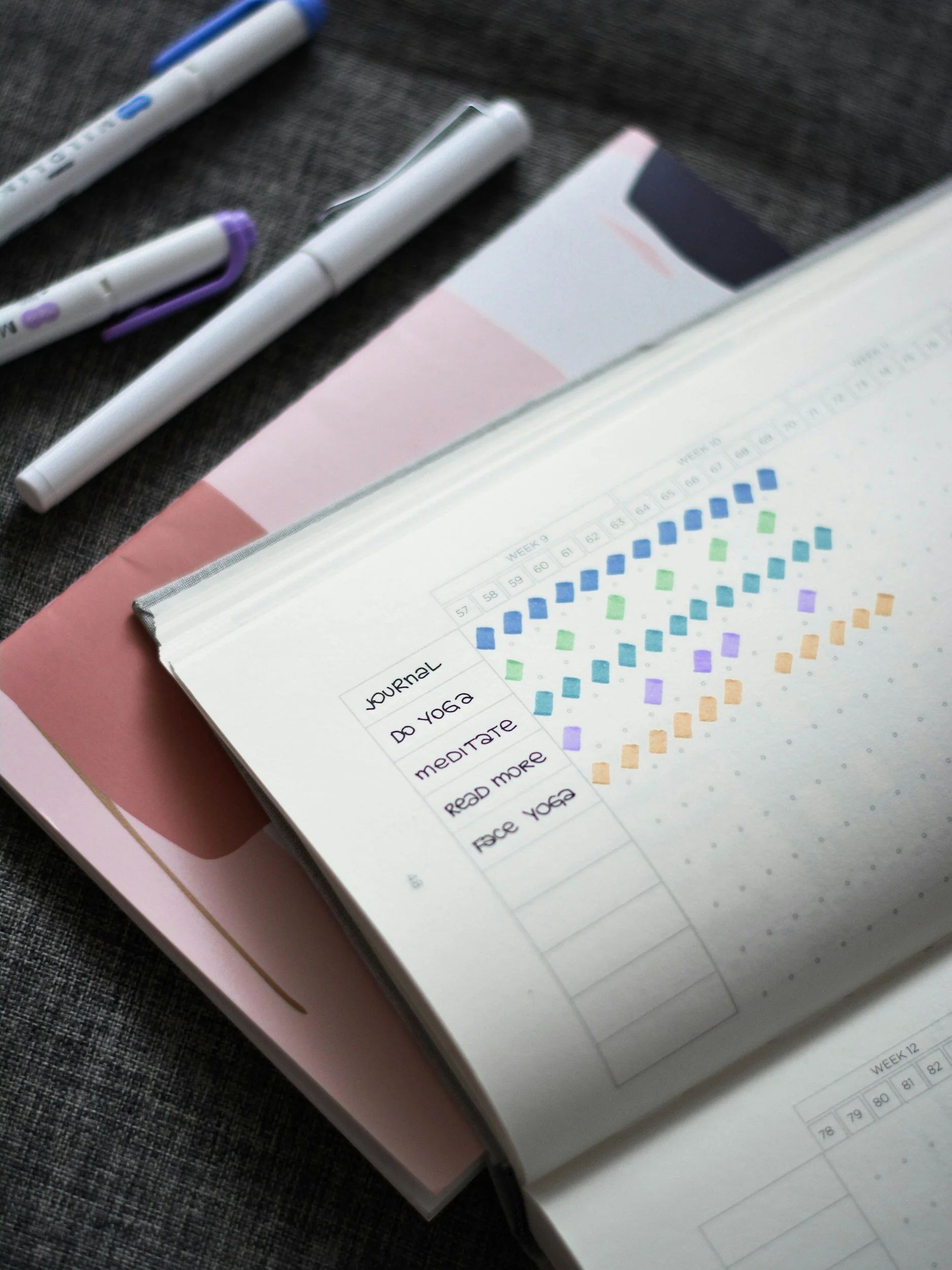
meditation is a critical tool, but it has to be used and used often to work its magic.
here are four ways to ensure meditation imbeds into your routine:
consistency
the best way to meditate is not to go hard and forget about the next day.
be consistent and trust the process of devotion to your best and highest self.
remember why
to be better, to release old patterns and habits,
to be at peace, to reduce anxiety,
to love yourself, to love others better.
connect it to a current habit
(taken from tiny habits by James Clear) - pick something you normally do, shower, eat, use the bathroom, or travel to work, eat lunch, travel home, to rewire your brain into looking to meditation for your routine.
do it when you least want to
in the midst of the storm, your uncontrolled movements, remember this tool.
in your chaos, return to meditation.
in the midst of the downward spiral, return to yourself.
recalibrate.

CLOSING THOUGHTS
meditation is not just for monks. it’s for humans.
this highly effective tool for overall health cultivates our highest self, allows us to be more human as we learn how to listen to the body and provide it what it needs to uphold our lives.
it’s a rest and reset that sharpens the axe and allows us to be more productive and efficient with our time.
incorporate mediation into your life today and uncover just how bright life can be.
RELATED BLOGS




Restore inner heart integrity with a private health consultation. This heart consultation will include a comprehensive assessment of your physical, mental, and spiritual health and a roadmap to inner & outer health and harmony.